



Rare Comet Could Become the Brightest of the Year and Is Now Visible to the Naked Eye
Comet C/2025 R3 may outshine Sirius as it makes a once in 170,000 years pass near Earth
SPACECOMET
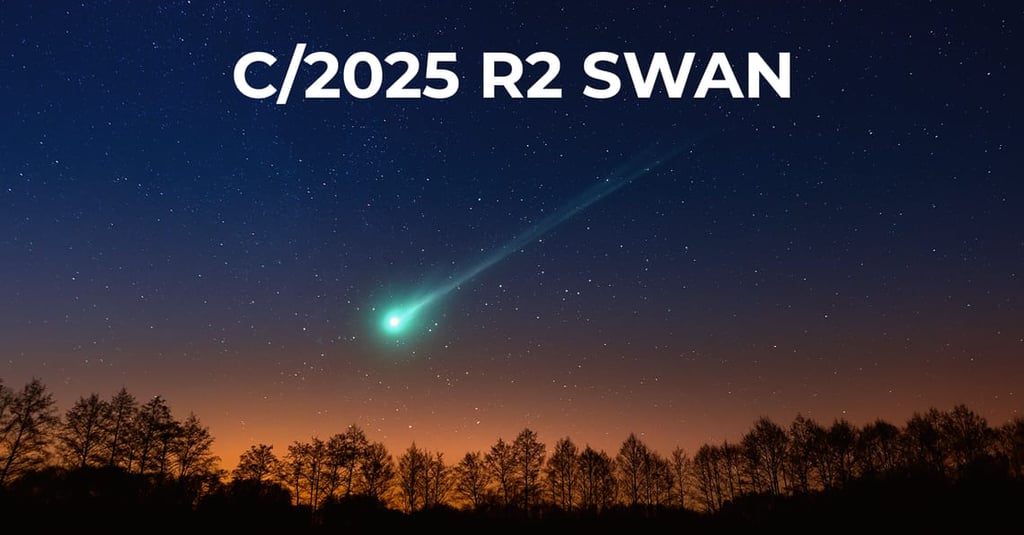
Image source: StarWalk / starwalk.space
A rare comet, potentially the brightest of the year, is currently streaking across the sky and can already be seen with the naked eye. The object, known as Comet C/2025 R3, is making a spectacular appearance that won’t happen again for another 170,000 years.
Discovered in 2025, the comet has surprised astronomers by brightening far more than expected. Experts say it may reach an exceptionally intense magnitude, possibly even outshining Sirius, the brightest star in the night sky. That level of brightness would make it one of the most remarkable celestial events of the decade.
The best viewing window is between late April and early May. In the Northern Hemisphere — including the United States — the comet appears just before dawn, low on the eastern horizon. In Brazil and other parts of the Southern Hemisphere, it becomes visible right after sunset, glowing low in the western sky.
Because the comet stays very close to the horizon, astronomers recommend finding a dark location, far from city lights, to improve visibility. Binoculars can help observers pick out the comet’s coma and its developing tail, especially during its brightest phase.
Scientists emphasize how rare this opportunity is. Comet C/2025 R3 follows an extremely long orbital path, meaning it will not return to Earth’s vicinity for 170 millennia — long after human civilization as we know it has changed beyond recognition.
For skywatchers, this is a once‑in‑a‑lifetime chance to witness a comet that may become one of the brightest objects in the night sky this year.