



New U.S. Nutrition Guidelines Could Raise Annual Food Costs, Study Finds
Descrição do post.
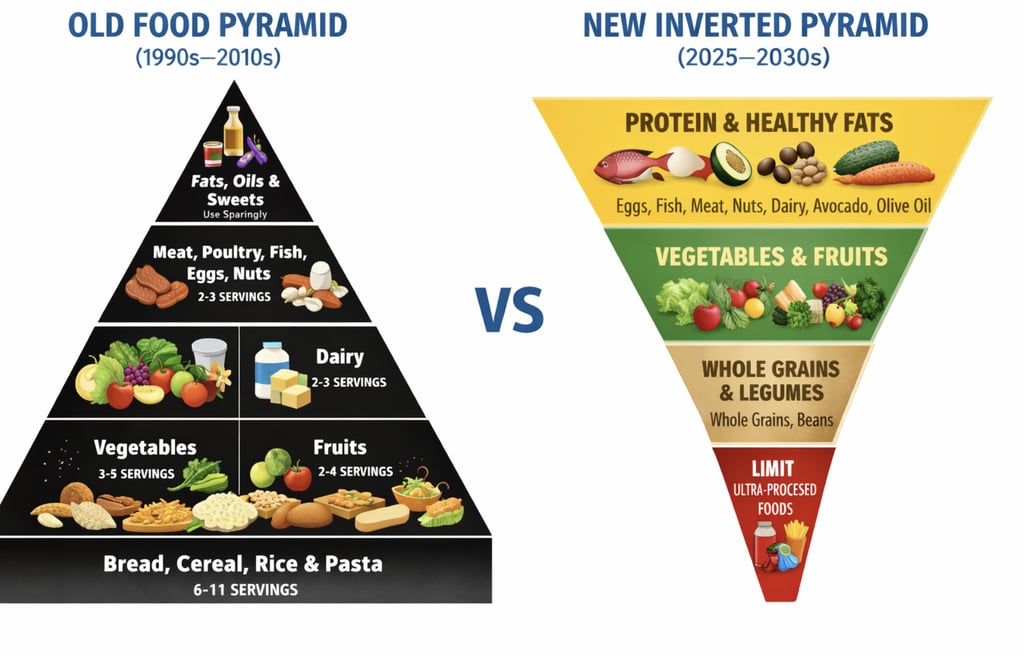
Image: Screenshot related to updated U.S. nutrition guidelines — source: squarespace‑cdn.com
The United States Department of Agriculture (USDA) updated its official dietary guidelines earlier this year, but researchers warn that following the new recommendations may come with a higher price tag for American families. A recent analysis shows that adopting the revised nutrition model could add more than $1,000 per year to a household’s grocery bill — an estimated 32% increase in annual food spending.
The updated guidelines reverse the logic of previous recommendations. Instead of emphasizing grains as the foundation of the diet, the new model gives more space to proteins, dairy, healthy fats, fruits, and vegetables — categories that tend to be more expensive in most supermarkets.
Nutrition specialist Helton Finocchio explains that the shift reflects growing scientific evidence about the benefits of whole foods and balanced macronutrients. However, he notes that the financial impact is real, especially for families already struggling with rising food prices.
Researchers say the higher cost is linked to the types of products required to meet the new standards, which often include fresh produce, lean proteins, and minimally processed foods. These items typically cost more than packaged or grain‑based alternatives.
Even so, specialists argue that the long‑term benefits may outweigh the initial financial burden. According to experts, investing in healthier eating patterns could reduce future spending on medical care and medications by lowering the risk of chronic diseases linked to poor diet.
As the debate continues, nutritionists emphasize the importance of adapting the guidelines to each family’s reality, finding affordable ways to incorporate healthier choices without compromising overall well‑being.