



Nail Biting Habit Sends Young Woman to the ER, Experts Warn of Global Health Risk
Onychophagia affects nearly 30% of the world’s population and can lead to dangerous infections
HEALTH
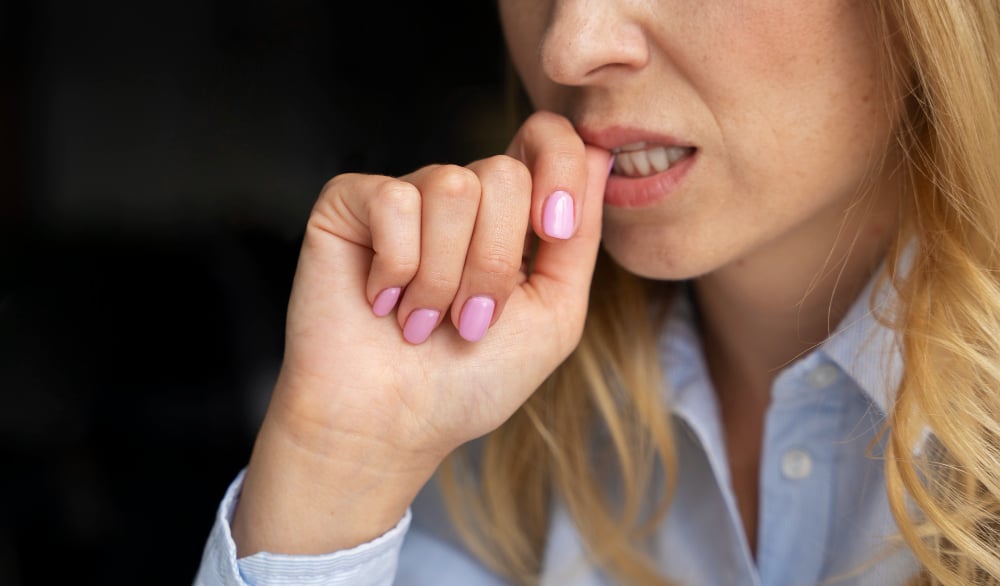
Image by freepik
A simple, automatic gesture for many people—biting their nails—can turn into a serious health threat when it becomes routine. Hands touch contaminated surfaces constantly, and when fingers go into the mouth, bacteria, fungi, and viruses can enter the body, triggering infections, inflammation, and even dental problems. The habit can also deform nail growth and injure the surrounding skin.
Doctors classify chronic nail‑biting as onychophagia, a condition that affects about 30% of people worldwide, according to global behavioral‑health surveys.
A Routine Habit That Turned Into a Medical Emergency
For Gabby Swierzewski, 21, the consequences were far more severe than she ever imagined. What began as a mild irritation on her finger quickly escalated into a serious infection. The swelling spread rapidly, required urgent medical care, and nearly resulted in the loss of her finger.
Gabby said she has bitten her nails since childhood and never thought the habit could lead to such a dangerous situation.
Neuroscientist Thais Pedrosa explains that the behavior often has emotional roots:
“Nail‑biting can be triggered by stress, boredom, or anxiety. For many people, it becomes a way to relieve tension without realizing the risks involved.”
Why Nail‑Biting Happens
Researchers point to several factors that can trigger or reinforce the habit:
Genetics — Some studies suggest a hereditary component in repetitive behaviors.
Stress and anxiety — Nail‑biting often increases during emotional tension.
Boredom or inactivity — The habit can emerge as a subconscious way to stay stimulated.
Conditions like OCD or anxiety disorders — In some cases, onychophagia is linked to underlying mental‑health conditions.
Pedrosa notes that the first step toward breaking the habit is identifying the trigger:
“Understanding when and why you start biting your nails is essential. Awareness is the foundation for changing the behavior.”
The Hidden Health Risks
Medical specialists warn that nail‑biting exposes the body to a range of health threats:
Bacterial infections from germs trapped under the nails
Paronychia, a painful infection of the nail folds
Dental damage, including chipped teeth and gum irritation
Skin injuries that can become entry points for pathogens
The U.S. Centers for Disease Control and Prevention (CDC) notes that hands are among the most common carriers of infectious agents, reinforcing the importance of avoiding contact between fingers and the mouth.
A Preventable Problem With Serious Consequences
Gabby’s case highlights how a seemingly harmless habit can escalate quickly. Health experts recommend strategies such as keeping nails trimmed, using bitter‑tasting nail coatings, replacing the habit with stress‑relief tools, and seeking professional support when the behavior is linked to anxiety.